The Mechanics Behind Pakistan's Online Casino Games: What Actually Moves Your PKR
The Mechanics Behind Pakistan's Online Casino Games: What Actually Moves Your PKR The first thing worth understanding before depositing PKR 1,000 through JazzCash or Easypaisa is that every game on an...

The Mechanics Behind Pakistan's Online Casino Games: What Actually Moves Your PKR
The first thing worth understanding before depositing PKR 1,000 through JazzCash or Easypaisa is that every game on an online casino platform runs on a built-in mathematical edge. This isn't a secret — it's published in game rules and RTP disclosures. What gets lost in regular play is how much that edge compounds across a session, and how specific configuration choices operators make directly affect what leaves your account versus what stays.
For Pakistani players at pakwin777 who treat this seriously — not as a hobby, but as a wallet decision — the difference between understanding mechanics and playing by feel is measurable in rupees. Here's where the numbers actually sit.
Game Configurations: Why Two Versions of the Same Game Act Differently
Every game on a platform runs at a configured return-to-player percentage. The RTP tells you, theoretically, what percentage of all wagers the game returns to players across a large sample. A slot configured at 96.5% retains 3.5% of all bets. One at 94.5% retains 5.5%.
That 2% difference sounds academic until you run the math. At PKR 100 per spin across 500 rounds, the higher-RTP version costs you approximately PKR 1,000 less in expected house edge than the lower one. That is not a rounding error at Pakistani stakes.
Some games — slots especially — have multiple published RTP configurations an operator can switch between. A game might appear in the lobby in identical visual dress at two different RTP settings. Unless the platform explicitly labels which version is active, you are making a bet on the configuration you cannot see.
On a site like pakwin777, checking whether the lobby shows version information before committing to a game is a habit worth building. It takes thirty seconds. It changes your expected cost on a 500-spin run by a non-trivial amount at these stake levels.
RTP version changes are the most direct mechanism by which an operator affects player outcomes — not through manipulation of individual spins, but through the statistical backbone of the game itself.
Photo by Pavel Danilyuk on Pexels
The Dealer Upcard Problem: Decisions That Actually Move PKR
Live dealer games introduce a variable that slot players don't face: an opponent whose visible card tells you something about the probability of their outcome. In games like Blackjack, the dealer's upcard is public information that changes your optimal action on every hand.
This is where blackjack strategy stops being theoretical and starts moving actual PKR.
The core principle in basic Blackjack strategy is: for every hand total you hold, there is a mathematically optimal action given every possible dealer upcard. These aren't opinions — they're derived from exhaustive simulation across millions of shoe iterations.
The pattern most Pakistani players discover after their third or fourth session is that the dealer's weakest upcards are 2 through 6. A dealer showing a 2, 3, 4, 5, or 6 has a statistically elevated chance of busting. When you hold a hard 12 through 16 — meaning no Ace counting as 11 — standing against a dealer 2 through 6 is the correct play because you are letting the mechanic work in your favor: you are not the one who busts if the dealer draws poorly.
Against a dealer 7 or above, the correct action flips. You hit, because the dealer's chance of reaching a strong total is high enough that staying puts you in a losing position more often than not.
The hardest decision in practice is sitting on a hand like hard 13 against a dealer 5. It feels passive. It feels like you're giving up. The math says the dealer busts on a 5 upcard approximately 42% of the time across a full shoe. Standing on 13 against a dealer 5 is not passive — it is a direct application of probability that shifts your expected outcome on that hand.
Live blackjack played with basic strategy carries a house edge around 0.5%. Played by feel or pattern recognition, it pushes toward 2% or above. Over a 50-hand session at PKR 85 per hand, that difference amounts to roughly PKR 637 in theoretical expected loss. This is not a subtle number at the stakes most Pakistani players operate at.
What changes once this clicks is the quality of decisions stops feeling arbitrary. It starts feeling like rule-following. That shift in register — from guessing to applying a framework — is where the PKR movement becomes structural rather than luck-driven.
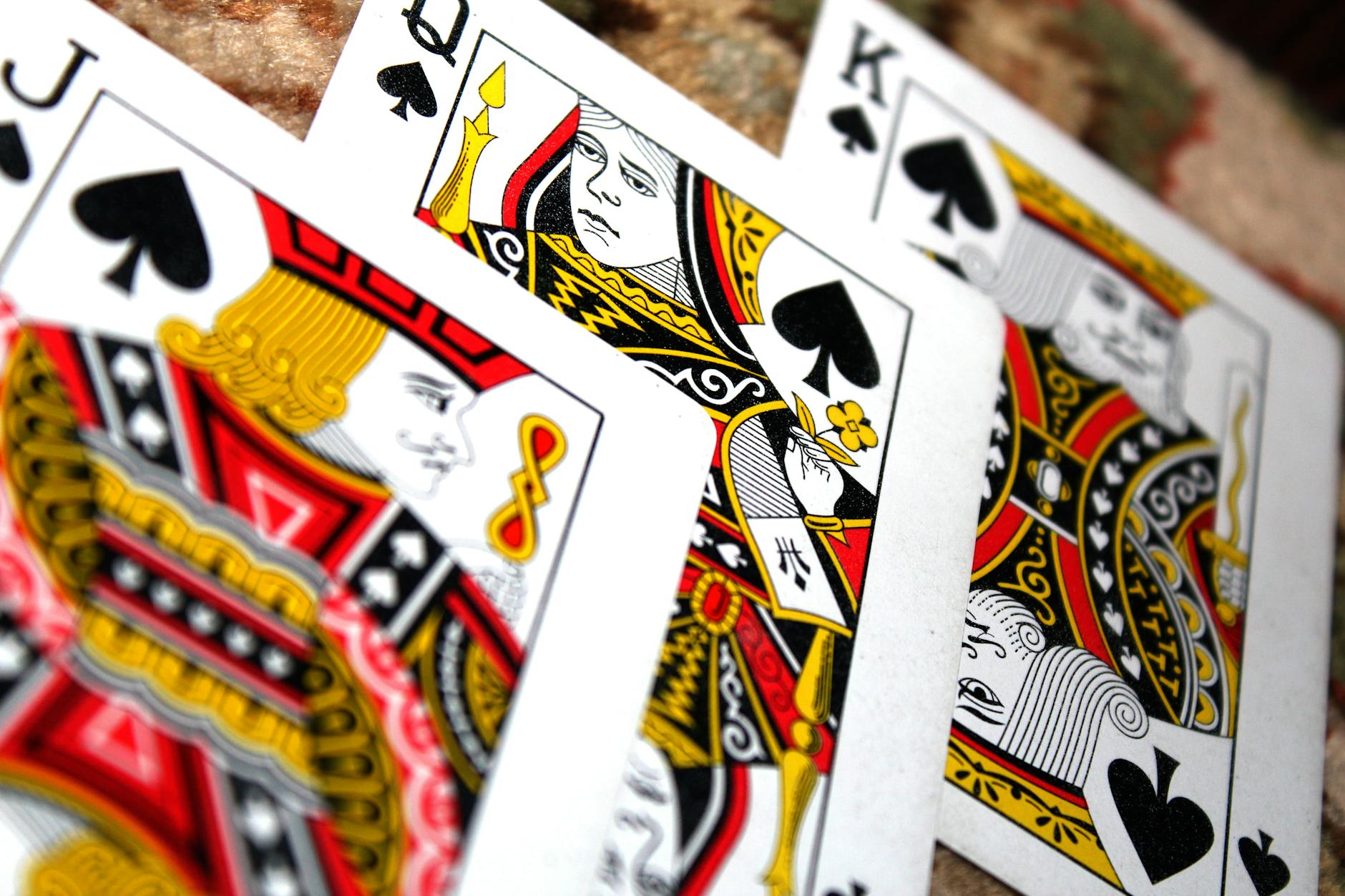
Photo by jalil shams on Pexels

Photo by Anna Shvets on Pexels
The Earning Model and Easypaisa Withdrawals: What Actually Converts
The earning model on an online casino platform is not a single thing — it has layers, and most players interact with only one of them.
The layer everyone sees is game outcomes. Spin a slot, draw a hand, place a bet. The result is concrete and immediate. What most players don't track with equivalent precision is the earning model layered underneath: rebate percentages on total wagered amount, VIP tier multipliers that apply to weekly payouts, referral bonuses that trigger when someone you brought to the platform deposits and plays.
These mechanisms generate returns on activity that exist independently of whether you won or lost your individual hands. They are real. They compound with consistent play. And they are where serious Pakistani players focus their attention — not on finding a winning formula inside a single game's RNG, but on capturing every available percentage on every wager they were going to place anyway.
The easypaisa withdrawals earning relationship is the bridge between platform credits and actual bank balance. When you withdraw via Easypaisa and the transfer clears to your Pakistani Rupee account within 24 hours, the earning stops being theoretical. It becomes PKR. That concreteness is part of why the platform's earning model remains credible even across sessions that, statistically, should have eroded confidence.
At pakwin777, Easypaisa is the primary withdrawal channel for Pakistani players. Minimum withdrawal amounts and processing windows are published in the account section — check them before a session so there are no surprises when you want to move funds out.

Photo by Dovydas Pranka on Pexels
Practical FAQ for Pakistani Players
How do I verify which RTP version a game is running at pakwin777?
Check the game's info icon in the lobby — most game providers include RTP disclosure in the help or info section. If the version is listed, note it before playing. If it's not visible, treat it as an unknown and adjust your stake size accordingly.
Why does basic strategy mathematically work if individual hands are random?
Because basic strategy is not about predicting individual hands — it's about making the decision with the highest probability of a favorable outcome across every instance of that situation. Over a large enough sample, applying the correct action for each situation produces the theoretical RTP. Individual hands are random; the correct response to each situation is not.
How long do Easypaisa withdrawals take to process?
Most withdrawals at pakwin777 process within 24 hours via Easypaisa. Larger amounts may require additional verification. Depositing and withdrawing in PKR via local methods eliminates currency conversion fees — another layer where the earning model operates more cleanly for Pakistani players using domestic payment channels.

Photo by dp singh Bhullar on Pexels
pakwin777 · System Archive · Entry Complete